Archive for the ‘Uncategorized’ Category

Night Photography Workshop in the Catskills

Saturday, October 2nd, 2010

Hosted by
Catskills Workshops
Limited Availability!!!
Date: Friday October 22nd- Sunday October 24th 2010

Instructor: Gabriel Biderman

Where: Catskills Workshops and Retreats, Woodburne, New York.

Cost: $695 including room and board

I’m very excited to be coming back to teach at the Catskills Workshops and Retreats this October!

New this year, we’ve extended the Night Photography class to be 2 1/2 days-nights of complete immersion into the world of Night Photography!

Based at the 15 acre farm of the Catskills Workshops & Retreats in Woodbourne, NY ~ just 2 hours north of NYC.

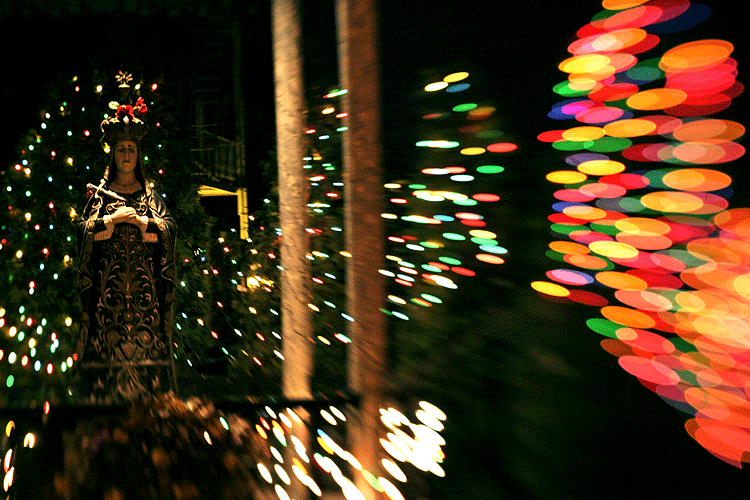
In this workshop we will look beyond the fleeting moments of time and explore images that can be created at night
when you expose for seconds, minutes, and even hours with your camera.

Gabriel Biderman is a self-taught photographer who has been specializing in the fine art of the long exposure with everything
from pinhole to the latest digital cameras.

Far away from the city lights and with the full moon lighting our night, you’ll learn how to capture star trails and spectacular
nightscape images.  Gabriel will go into detail on how to meter and process your long exposures using either film or digital capture. This hands-on-workshop will include lecture time, in the field light painting and star trail techniques, as well as using models to create ghosts.

You will also have the opportunity to go on location to explore mixing twilight and urban lights in one of the small towns of the scenic Catskills.

Beyond the great instruction and ample time to practice the material covered, the Catskills Workshops & Retreats is becoming known for it’s healthy home cooking. So prepare your tasted buds for some great eats.

Please click here for additional information & to sign up for the workshop.

The f295 21st Century Opening Weekend!

Friday, January 23rd, 2009

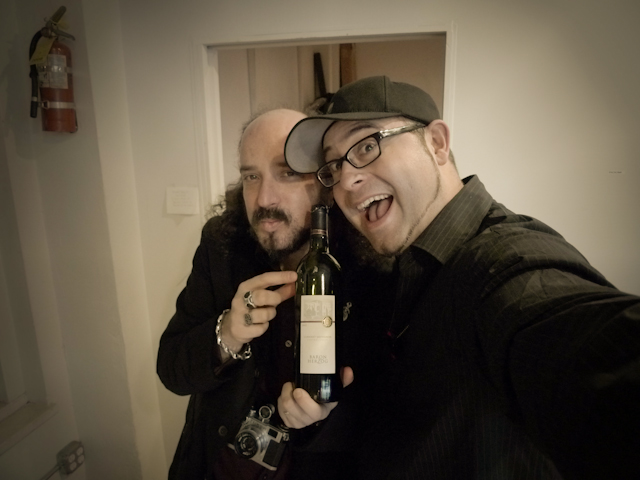
The f295 kickoff last weekend was a huge success!  Thanks to the over 150 people who came out to Saturday night’s 21st Century Photography opening!  The work and vibe must have been reminiscent of Stieglitz‘s old Camera Club openings!  Thanks  also to all that helped put the show together:  the artists who shared their work, The Camera Club of NY who gave their 500 square feet, David, Jennifer, and Amy on the B&H organizational end ~ as well as serving up a record amount of kosher wine!  And finally, Tom Persinger, who brought us all together and had one heck of a time trying to make letters stick on walls.

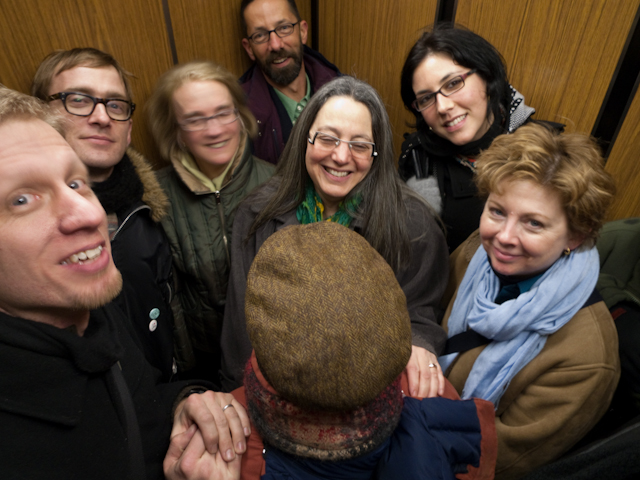
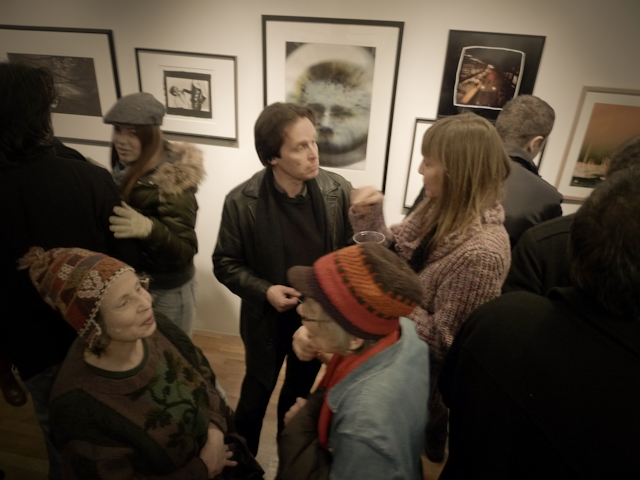
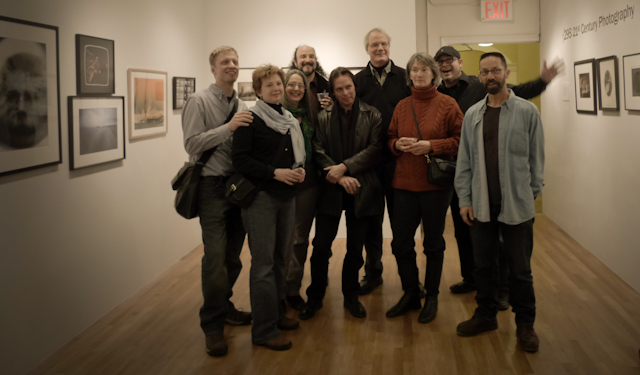
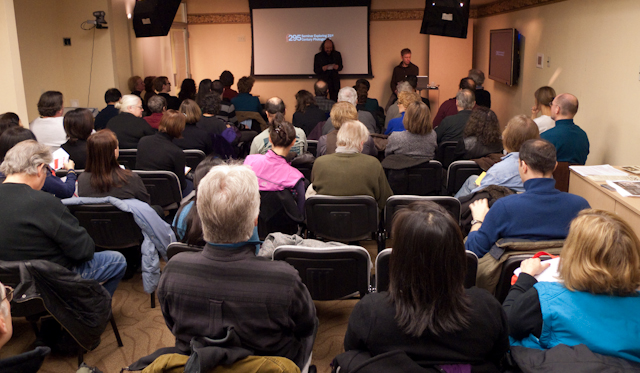
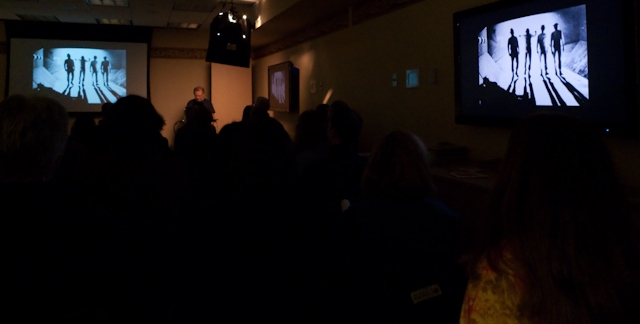
Wondering what camera to document the gallery opening with, I finally settled on using my trusty Panasonic LX-3, which is an advanced digital point and shoot.  The pioneering Panasonic has a little throwback feature, it has a pinhole scene mode!  See, I told you that pinholes were enjoying a renaissance!  For some reason the pinhole mode is limited to 3MP images while applying a vignette and desaturating the image.   I know it would have been better if the lens could have come off to reveal a real pinhole over the digital sensor but hey, I wasn’t going to get everyone to stand still for 5 hours for the group shot! All the images on the left were taken in this “pinhole mode” while the right hand side shows the packed house for Sunday’s presentation at the B&H Event Space.  For the second straight year over 80 people showed up to listen and learn about new ways to use older technology.

We all struggle with keeping our art and life fresh and new.  For photographers the terms wedding, portrait, landscape, pinhole, or even alt process can all pigeonhole and limit our vision.  Tom Persinger asks us to look beyond these stereotypes and empower the 21st Century Photography:

The 21st Century Photographer remains open to the exploration and use of a variety of processes, techniques, and technologies so long as the chosen method(s) most concisely articulate their creative vision. A net result of this paradigm shift is not only complete artistic freedom but also a palpable sense of empowerment. Historically photography has marched down the long path of process obsolescence – one in which new techniques replace old in a continual cycle of progress. In a 21st Century approach, however, control is wrestled from profit driven agencies -corporations, advertisers, and the marketplace all promoting a consumptive photographic model- and given to the artist/photographer. By virtue of taking the responsibility of control, photographers allow themselves to use a pastiche of tools and materials to make pictures. It is this freedom -which is new for many- that empowers and fuels the 21st Century Photographer.

Photography is a toolbox with many means to express your vision.  Some people choose one, others need multiple instruments to complete the vision.  This weekend I saw art that was in jars, painted on, waxed, dyed, and printed on anything from the latest digital technology to handmade emulsions on a variety of surfaces from tin, glass, and paper.  The photograph that I submitted in the show was originally a 6×9 slide.  I was deciding between two basic ways to present my print:
1.  Drop it off at a lab and have them make a negative copy of my positive slide and then a C-print
2.   Scan the slide and print at home on inkjet.
Now, my good friend and constant conscience, David Brommer, stood aghast when I told him that I  I was leaning towards the lab option;  mainly for convenience as I am still not 100% confident in my inkjet printing.  I’m still most at home in the B&W darkroom.  But he reminded me that I had to control the final outcome of my image.

And really, it is all about the process ~ from start to finish.

Now did I enjoy spending close to an hour digitally removing dust from my image?
No.
Is the excitement the same as flipping over the black and white image in the developer under the red light?
Nope.
But, seeing a project from start to finish is still pretty damn fulfilling.
the end of youngtown road

Monday, February 18th, 2008

How far back does it go?
20 years ago my family bought a couple acres of land on this dirt road, in a small summer town named Alton; population 3,000 in the winter, 5,000 in the summer. Alton is located at the southern tip of Lake Winnipesauke, the largest lake in New Hampshire. For the enthusiast, there are plenty of outdoor activities like skiing, hiking, camping, etc. Besides the lake and mountains, the region is also known for being the setting of the book, Peyton Place.
When we moved up here from Boston, I left a graduating class of 500+ for an all time high of 54 at Alton Central High School. And when I told classmates that I lived on Youngstown road, they would whisper back, “The one with the haunted house at the end?
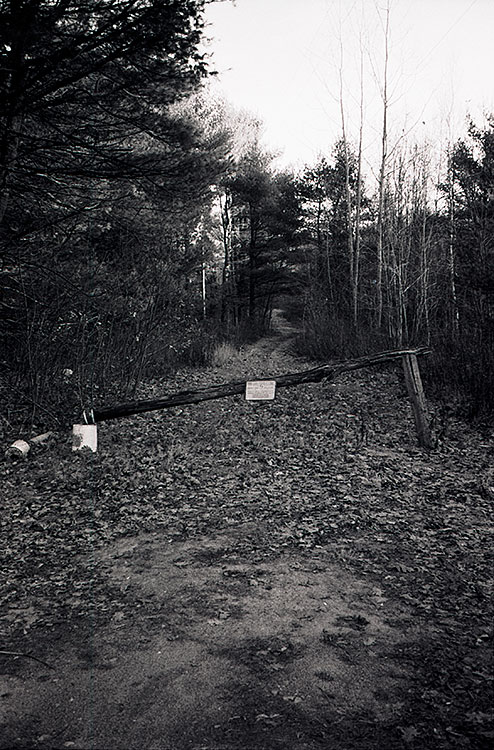
We lived in the last house on the left. Only a wooden plank, with Youngstown Road painted on it, marked the dirt road. This ill-marked entrance was easy to miss as it was hidden up the hill and behind the bend. It was a quiet street, about a mile long, and ended at a makeshift wooden barrier. Beyond, the road became almost entirely overgrown; the woods seemed to push you along until it emptied out onto this open field.
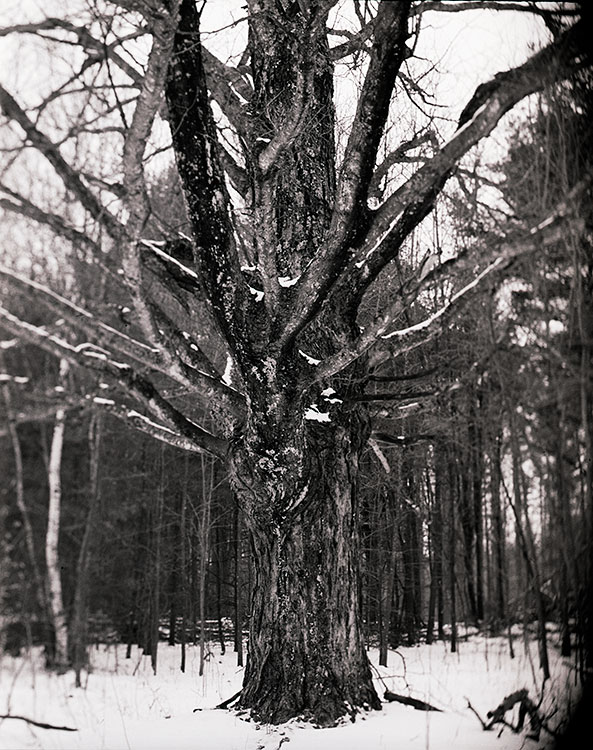
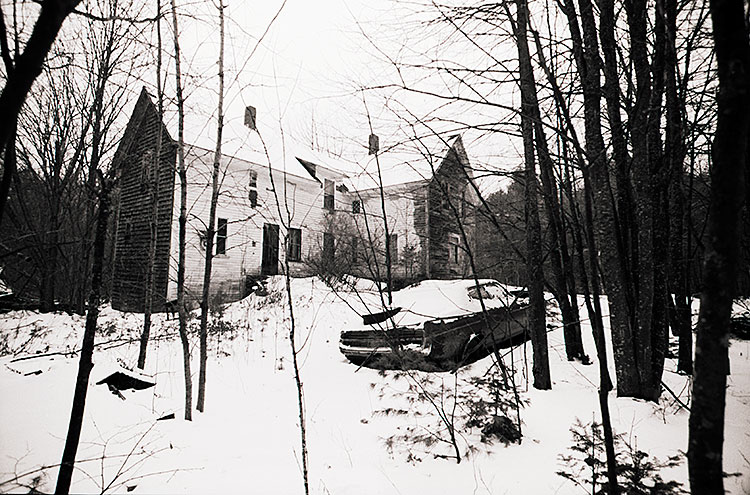
An abandoned Matador car lay in a heap to the left, an ancient tree to the right, and in the middle of the meadow the 200-year-old farmhouse stared down at you.
It definitely looked eerie.
You couldn’t see the house from ours, the woods were too thick, but you knew it was there. As a big brother, I used to scare my sisters with talks of summoning the ghosts and monsters of the house.
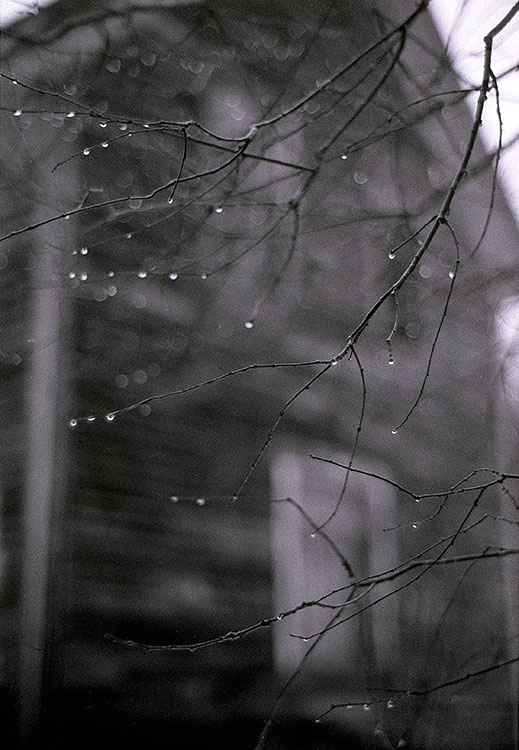
It wasn’t until later, when I was into photography and playing with plastic Holga cameras, that I overcame my own fears and visited the house again.
It was the perfect ruin.
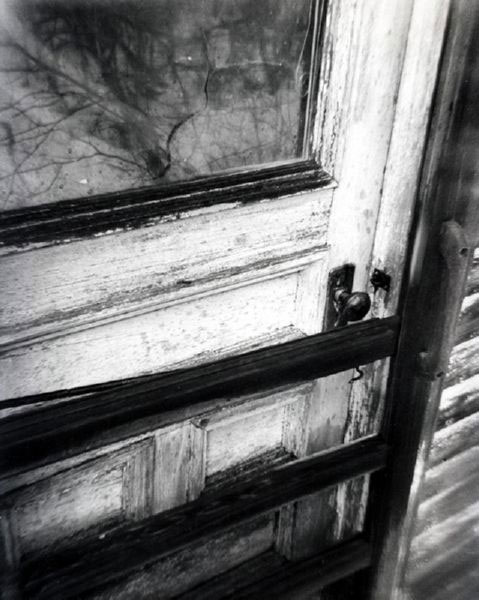
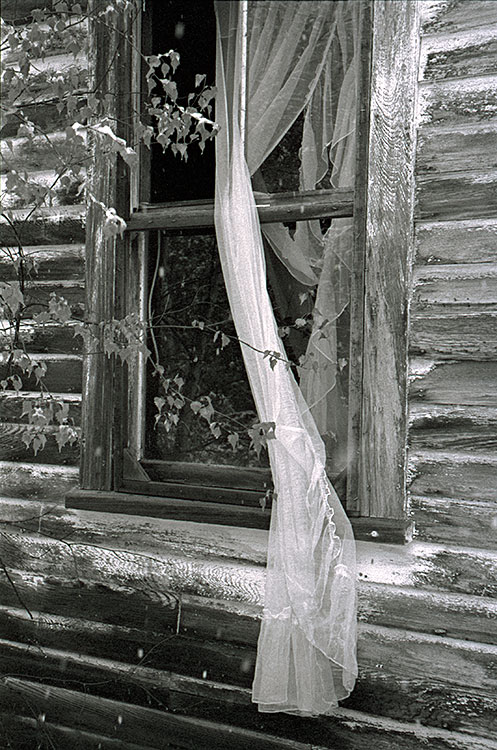
Peaking inside the windows revealed the years gone by: pots still on the stove, clothes hanging on the door, and did that curtain just move?
I never went in.
I was often times by myself in the meadow; the only sound was me trudging through the snow or mud as I took photos of this lonely place.
My younger sister told me later that she and some of her friends broke in. She was pretty spooked being inside, it must have been a serious dare. Inside they found a diary. It was the typical turn of the century talk of taking the horses down to town and how she missed her husband. No talks of spirits, but you could definitely feel them.

Youngstown became paved 13+ years ago and when they put a real street sign at the beginning of the road it now read Youngtown Road. The mile long street had now grown from 6 houses to 12.
Three years ago, my mother called to tell me that a family had purchased the house at the end of Youngtown road and the surrounding 200+ acres of land.
I was surprised and sad, for it was my secret little ruin no more.

On one of my next visits the Matador had been removed, and the house’s chipped paint was gone. The family that had purchased it was very keen to keep the original structure of the farmhouse. In fact the owners, Angie and Bob, talked about keeping the land as a nature reserve and offering camping sites for visitors.
In a small town, people look after each other. Even though my sisters were only 20-30 minutes away, my parents lived alone and it was nice to have life at the end of the road. That’s just what Angie and Bob did with my folks, especially helping them remove the snow that can bury the houses in the winter months of Northern New Hampshire.
During the first year of renovating, Angie and Bob invited my mother and I into the house. They really loved “this old house” and had heard that I had taken many pictures of it. Along with their 8-year-old daughter, Cassie, they gave us a tour. The house was barren inside. Gone were ancient artifacts of its previous owners. It was now clean and fortified. They weren’t living there yet but they talked excitedly about the whole renovation process. There was no talk of the house being haunted.
It seemed like the ghosts were gone.

Until Friday.
Sometime before 7am, shots were heard in the woods.
Cassie, was running through the woods, leaving a trail of blood that led to my parent’s door.
Her mother had shot her father.
She had tried to shoot her daughter, claiming the spirits were making her do it.
In the end, she took her own life.

It was a shock to my family, to the people of Alton, and Cassie…how do you survive?
We will forever wonder what went wrong at the end of Youngtown Road. Will the house continue to stand, hiding the secrets in its old beams, to be told only to those who listen in the silence of the night?

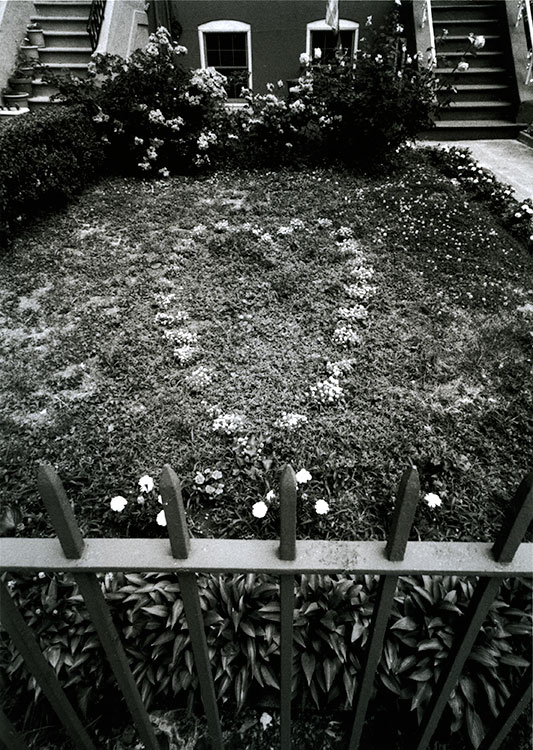
The heart of Carroll Gardens

Thursday, February 14th, 2008