Archive for the ‘Fine Art’ Category

Carroll Street Pigeons

Friday, February 1st, 2008

The word routine was born in 1676 according to Merriam-Webster.
We can thank the etymology of this word to the French. Specifically the Middle French, from the word route, meaning the traveled way.

Now, some of us have more routines than others.
There is no doubt about it, routines definitely help us streamline and accomplish the tasks that surround our day to day life.
But a break from the old routine of things…
Well, that can send ripples…

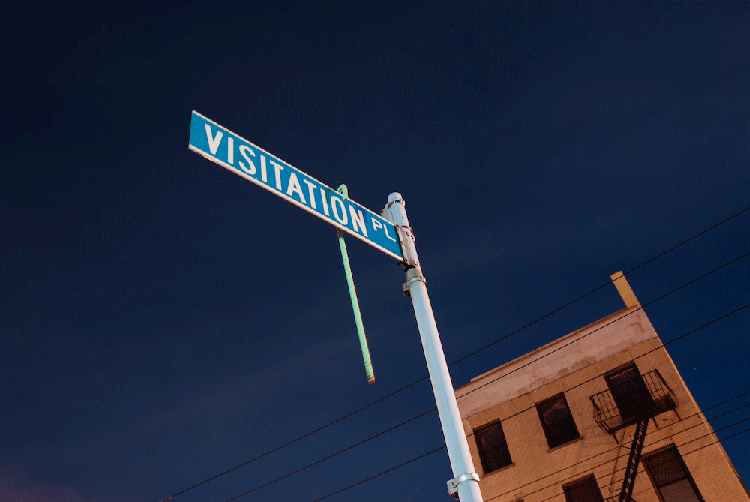
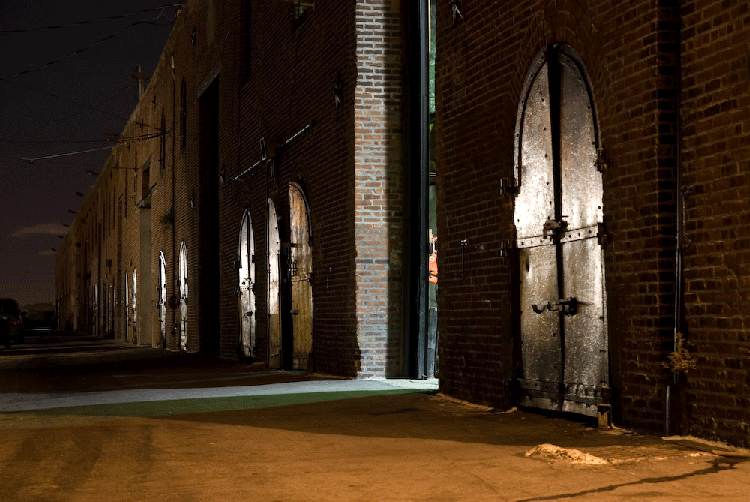
When I step outside I feel that anything can happen.
I can hear the subway’s echo as it enters the underground.
And if I’m lucky…
I’ll see pigeons flying in the sky.

f295 Symposium kick off!

Wednesday, January 30th, 2008

Last Sunday, I attended the first sold out show to be held at B&H’s 60+ seat Event’s Space. Over 80 people showed up at 10:30am to learn more about Lensless, Alternative and Adaptive Photographic Processes! In other words, a lot of people showed up to a NON-digital photographic event!

This was a preview of the f295 Symposium that will be taking place in Pittsburgh from May 28th – June 1st 2008. If you have any interest in Pinhole or Toy cameras or thought it would be cool to learn any of the alternative photographic processes from albumen to ziatype, well this event is not to be missed!

I attended last year’s symposium, and it was an amazing 4 days of exhibitions, lectures and round-table discussions, workshops, and networking focused on the in-depth exploration of alternative photographic processes. I met a lot of talented artists, was inspired by the speakers, and attended a wonderful workshop where I made my own Daguerreotype!

This year, right off the bat, the Holga Tintype Workshop has my alternative creative juices flowing! It was really great to see so many people show up on Sunday and for those of you who constantly ask when film will die? My answer is N E V E R!

The speakers this Sunday included Laura Blacklow, Martha Casanave, Jill Enfield, Jessica Ferguson, Scott McMahon, Erin Malone, Tom Persinger, Kelly Anderson-Staley, and Jerry Spagnoli. Photos of the event can be found here.

The featured speakers in Pittsburgh will be:
Martha Casanave, Jill Enfield, Jessica Ferguson, Robert Hirsch, Jerry Spagnoli, Keith Taylor, and Ilan Wolff.
There are 40 more slots available for the early bird registration discount of $120 for the Symposium.

The Workshops Registration will start around 2/16 and will be available only to attendees of the symposium.
The featured Workshops are:

I hope to see you there!

Sutro Baths part 2

Monday, December 24th, 2007
Joe Reifer Andy Frazer Andy Frazer Shawn Peterson
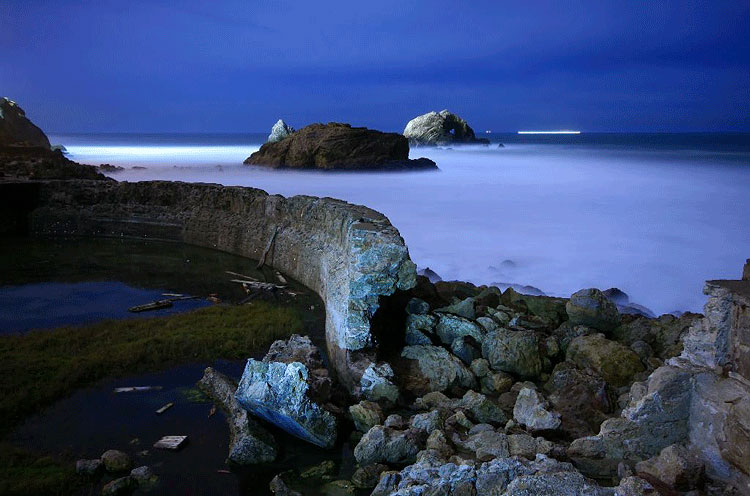
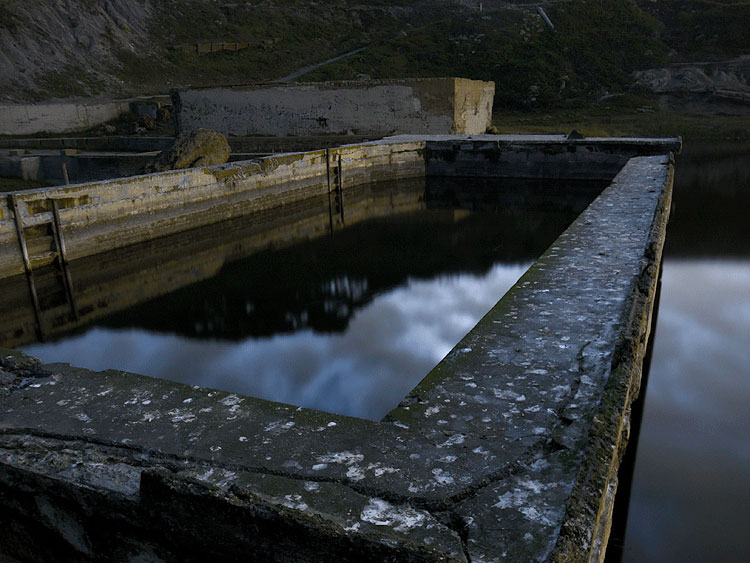
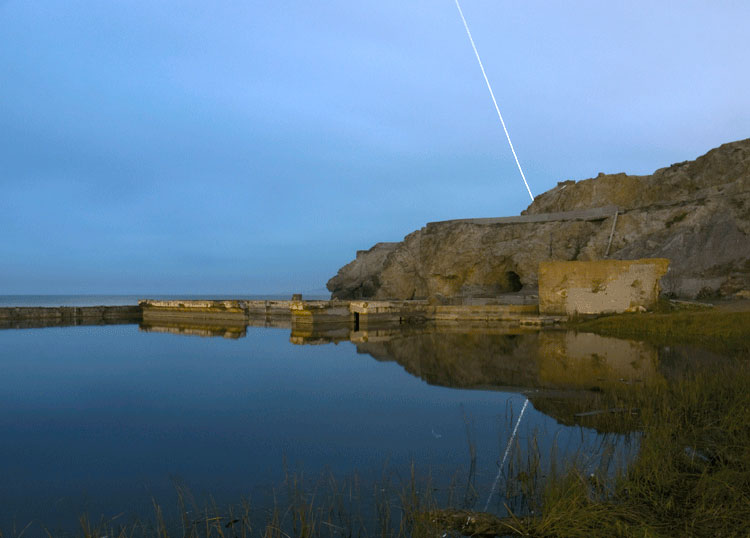
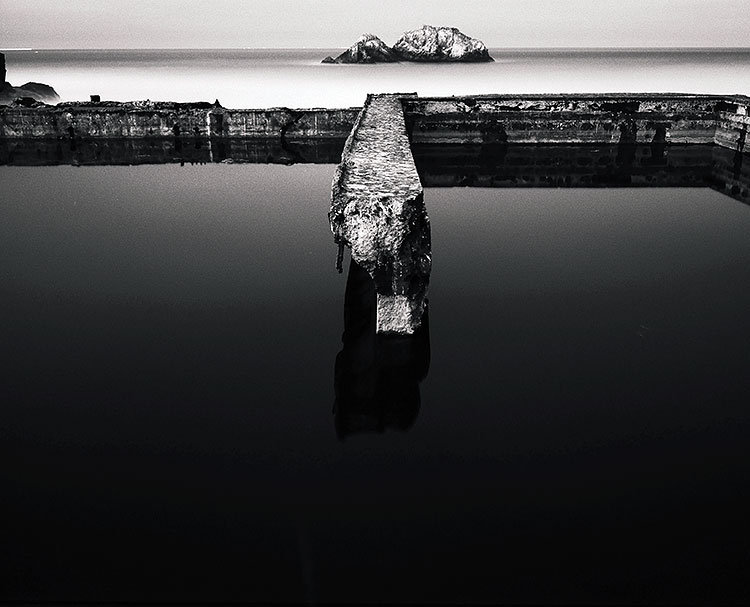
Shawn Peterson Sutro 7 - Gabriel Biderman - Ricoh GRD 28mm lens 3 min. f/4 ISO 64 Sutro 8 - Gabriel Biderman - Ricoh GRD 28mm lens 3 min. f/5.6 ISO 64 Sutro 3 - Gabriel Biderman - Mamiya 7 65mm lens Tri-X 400 8 min. f/11

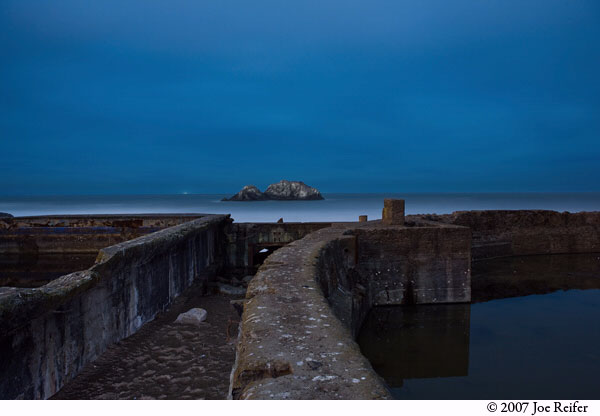
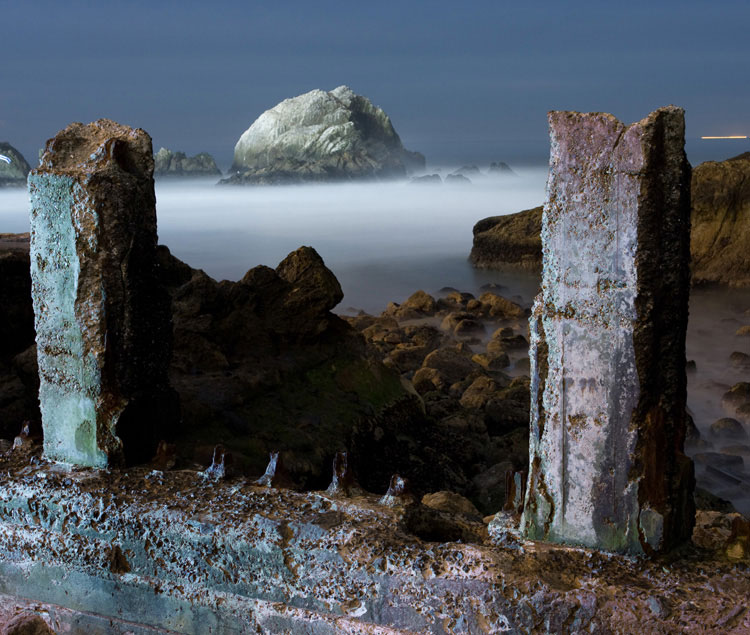
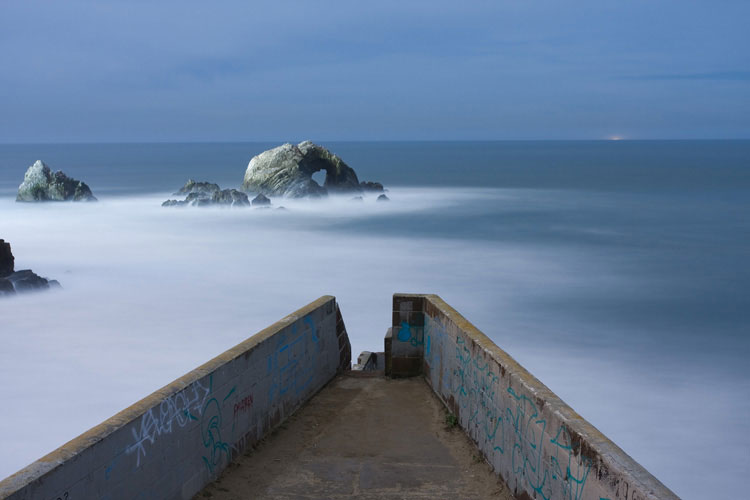
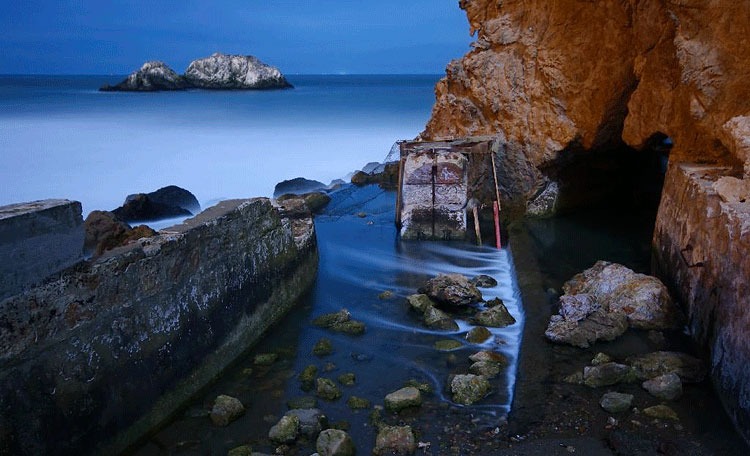
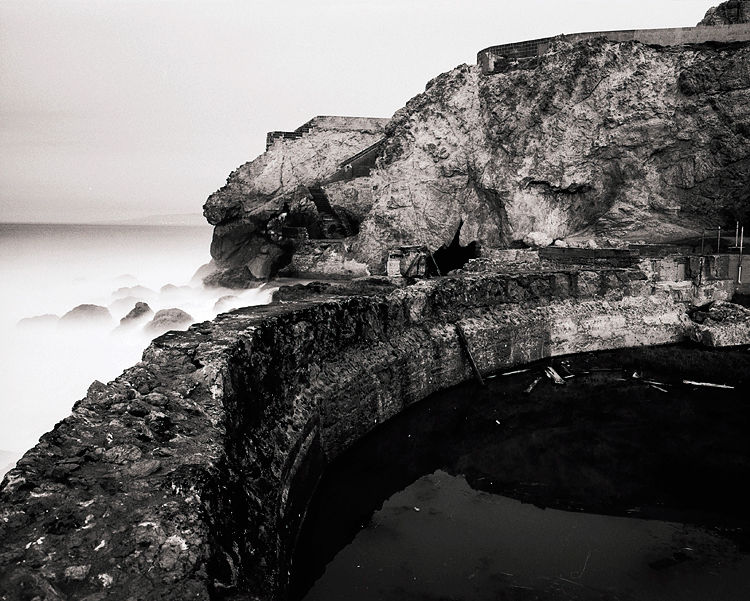
Modern ruins, labyrinthine structures, wind blown cypress trees clinging to the cliff, and caves and paths that lead to Land’s End; this is the Sutro Baths that I’ve been fascinated with since I was first taken to Ocean Beach as a young child.
The Sutro ruins on the outskirts of San Francisco are where we’d often take the dog hiking along the paths above or exploring the abandoned remains below. This probably set in place my future fascination for Ruinism. The Sutro Baths are no secret and have been welcoming the public and the Pacific in one way or another for over 110 years.
Built with iron, wood, and glass in the grandiose manner of London’s Crystal Palace, the grand opening to the public was held on March 14, 1896. The Industrial Age was in full swing and this engineering masterpiece had taken only 6 years to build at the cost of $1 million. It was the dream of the eccentric Adolph Sutro, who had just finished a lackluster 2 year term as San Francisco’s 24th mayor. The extravagant public bathhouse was the world’s largest indoor swimming pool at that time and was inspired by the ancient baths of Rome. Visitors to the baths had 7 different swimming pools to choose from, one freshwater and six salt water bathes, ranging in temperature from 80 degrees to sea temperature. During high tides, water would flow directly into the pools from the Pacific, recycling 2 million gallons of water in an hour. During low tides, a powerful turbine water pump, built inside a cave at sea level, could be switched on from a control room to fill the tanks at a rate of 6,000 gallons a minute. Over 20,000 swimsuits were for rent and the facility could hold over 10,000 people at a time. To see an Edison Manufacturing Co short film of the Giant Slide at the Sutro Baths from from 1897 click here.
If you preferred not to swim, the bathhouse also incorporated a museum displaying some of the finest Egyptian artifacts outside of Egypt as well as Sutro’s varied personal collection of his travels. An 8,000 person Concert Hall and an ice-skating rink were also part of the Sutro Baths.

Five hundred dressing rooms … spacious elevators and broad staircases … pavilions, balustrades, promenades, alcoves and corridors adorned with tropical plants, fountains, flowers, pictures, … the collected treasure of foreign travels… a portico with four Ionic columns and pilasters which lead to a noble staircase, wide, gradual of ascent, bordered with broad-leaved palms, the flowering pomegranate, fragrant magnolias … [touching] the very rim of the reveling waves.

However, due to the high operating and maintenance costs, the Sutro Baths closed its doors in 1966. During its demolition, a suspicious fire broke out and left the Baths in the ruins that you can see today.
What has fascinated me most is how little the ruins have changed. They are maintained by the National Park Service and very little is off limits for urban exploration.
Our “exploration” led to the photos that were taken on November 24th. It was a full moon, and my father and I met fellow nocturnalists Joe Reifer, Andy Frazer, and Shawn Peterson as the few clouds were breaking through to reveal the ruins of Sutro. We spent over 4 hours shooting, flashlights popping, and exposures being calculated. Armed with tripods, our exposures were running 2-8 minutes, with plenty of opportunity to soak in the true atmosphere of the baths. I’ve spent a lot of time at Sutro, but on a clear night with old and new friends, we explored the timeless time of Sutro.
To check out more of Joe Reifer work click here.
Andy Frazer’s blog on the night can be found here.
More of Shawn Peterson’s nightwork can is here.

To see some great photos from old Sutro Baths or read more about its history check out these sights:

Sutro Baths
Cliffhouse Project
Sutro’s
Outsidelands
Wikipedia

Seizing the Moments

Saturday, December 1st, 2007

On a recent trip to San Francisco, I got together with a bunch of Nocturnal guys and celebrated the Full Moon with a night shoot at the Sutro Bath ruins at Ocean Beach. I have to say that it was the warmest night I have ever spent on that beach. The moon was shining bright, the tide was pulling in, and the continual crashing of the waves brought a truly spiritual feeling to the evening.

Even though I was with 4 other guys, we all spread out and searched for our shots. I always have considered myself a solo shooter but I have really enjoyed being out with like-minded souls lately.
When you leave your camera open on a tripod for 3-15 minutes at a time, it’s comforting to have some friends with you. You’ll also be surprised with the type of conversations that arise in the wee hours of a long photoshoot. This got me thinking about the most common question a photographer is asked in life: What type of photography do you do?

Frequent pigeonholing answers for me have been – fine art photography, pinhole photography, travel photography, and night photography. But in reality, like a method actor, I enjoy the process of photography. The film, the developing, the darkroom, the lightroom, the time, and all the magic that comes from creating an image.

Good friend, and fellow pinhole photographer, Tom Persinger, recently debated TOP’s Mike Johnston over the importance of capturing the moment or moments. When most people pick up a camera and press the shutter, they try to capture a moment in time.
We all love that. It’s difficult though, your child doesn’t smile, or the moment is fleeting and gone by the time you raise the camera to your eye and trying to recreate it is, well, contrived. Without us realizing it, when we press the shutter, we are dealing with fractions of seconds and how do you click on the right one?
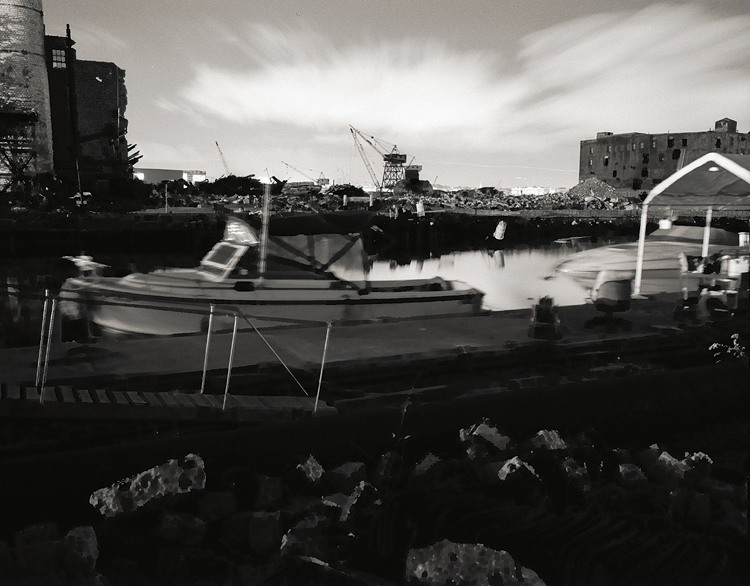
Henri Cartier-Bresson proved there was a fine art to capturing the decisive moment and became famous capturing 1/60th of a second his whole life. He was a very prolific photographer but when you think of the moments he captured during the 45 years of shooting at 1/60 of a second it probably amounted to 15 minutes! Geesh, I can do that easily in one or two exposures! When you take pinhole or night photographs, you are no longer dealing with fractions of seconds but often minutes and hours of time.
Tom Persinger says: The artifacts of motion revealed by extended exposures show the world as fundamentally impermanent and constantly changing.
He refers to this as a continuity of moments. For example, an airplane can fly through the sky and you will have the lights permanently recorded as a light trail in your shot. Instead of capturing the moment, you are seizing time itself! Why are there star trails in night shots? Well the earth is moving constantly and when you take a picture including the sky for over 8 minutes on a clear night, you’ve captured the earth revolving! Pretty cool, eh?

So I guess that makes me a photographer of time. And instead of seizing the moment, let’s seize the moments and capture the essence of the subject matter!
Stay tuned for a little history of the Sutro Baths and the rest of the group’s shots from that night.